

The Artemis Programme – Return to the Moon
After the Apollo 17 mission left the Moon in 1972, it was to take almost 54 years before humankind returned to our satellite. But now the time has come!
“That’s one small step for a man, one giant leap for mankind!”
With these words, Neil Armstrong became the first person to set foot on the Moon in 1969. He was followed by a further eleven men in the years that followed. But after the Apollo 17 mission left the Moon in 1972, it would be almost 54 years before humanity returned to our satellite.


Fast forward to the present day: it is 1 April 2026. Reid Wiseman, Victor Glover, Christina Koch and Jeremy Hansen are seated in the Orion capsule, ready for launch in a few hours’ time. That evening, they will lift off from the Kennedy Space Centre in Florida aboard the SLS rocket.
Their mission is historic. Using the gravitational forces of the Earth and the Moon – the principle of the so-called free-return trajectory, which enabled the Apollo 13 mission to return safely to Earth back in 1970 – they will leave Earth using minimal engine power, set a course for the Moon, orbit it and return to Earth largely under the influence of the Earth’s gravitational pull.
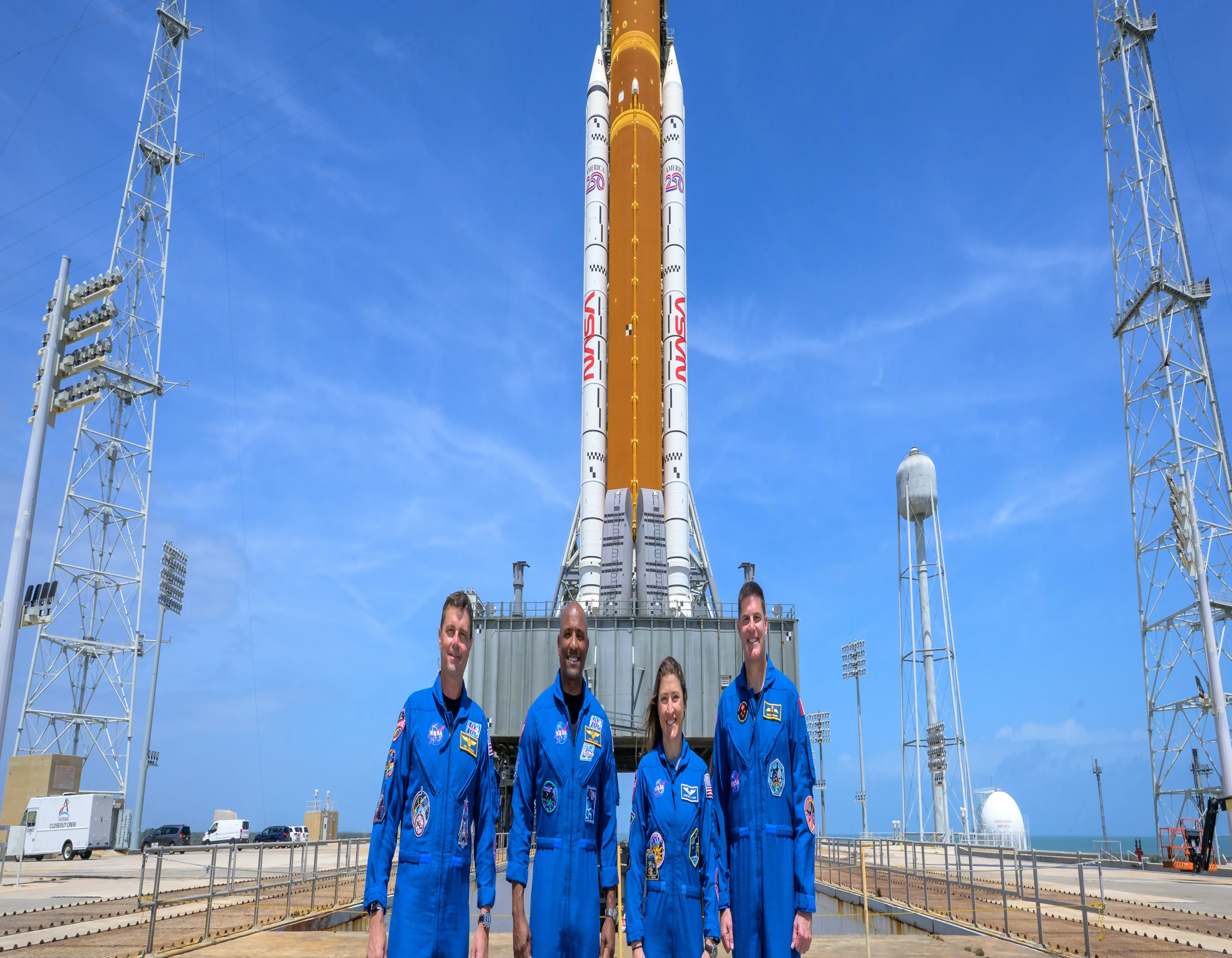
As of 7 April 2026, the astronauts had orbited the Moon at a minimum distance of around 6,545 km. In doing so, they travelled further from Earth than anyone had ever done before (a maximum of 406,771 km) and were able to observe features on the Moon’s surface that had never before been seen by humans. They named two craters: Integrity, after the Orion capsule, and Carroll, after the recently deceased wife of Reid Wiseman.
They are currently on their way back to Earth, having already left the Moon’s gravitational influence, and are expected to arrive on Friday with a splashdown in the Pacific Ocean.
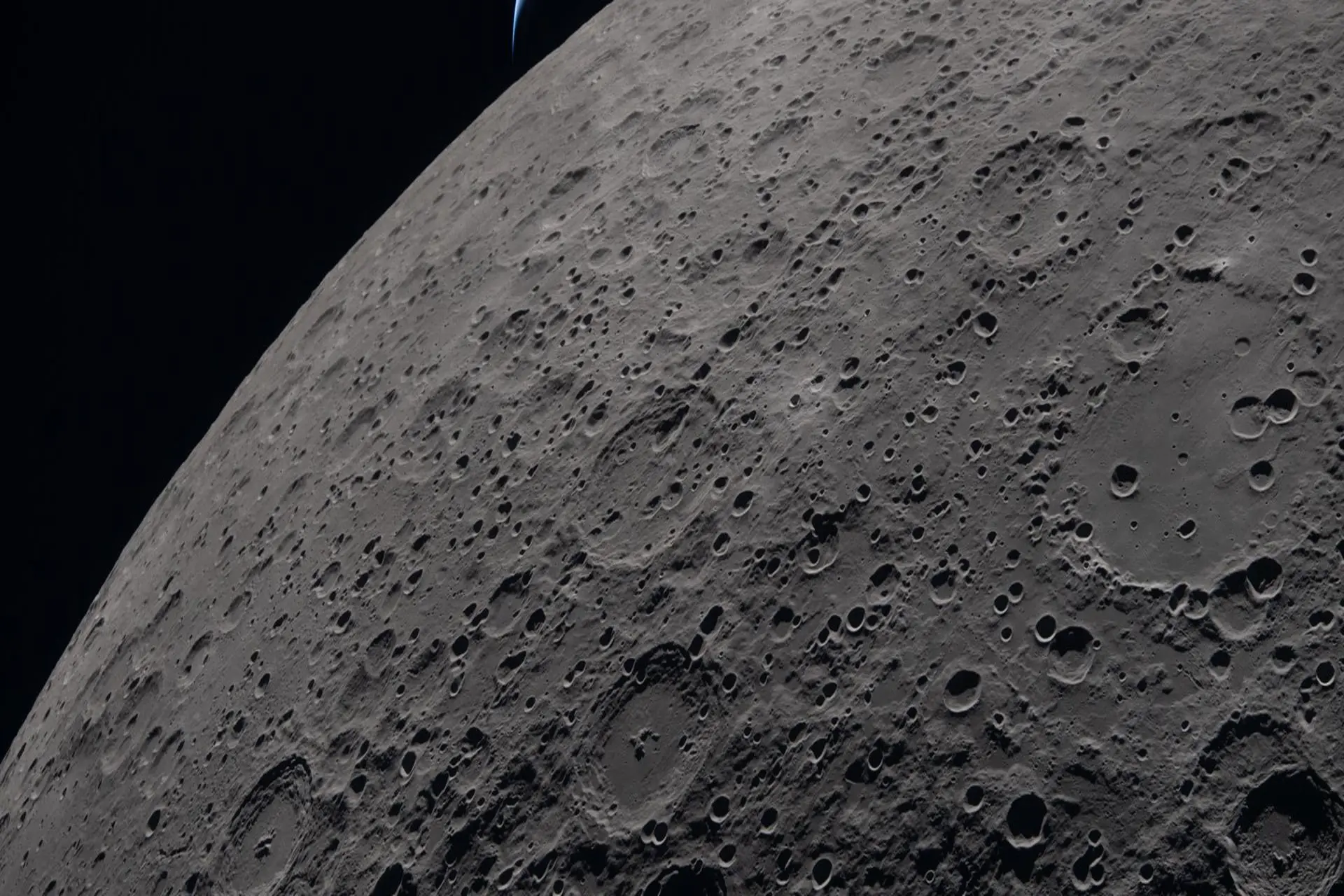
A further three Artemis missions are planned for the coming years, with Artemis IV marking humanity’s return to the lunar surface in 2028 at the earliest.
This page is continuously updated with new information.
You can also experience all the latest news live, simulated and up close in our daily planetarium programme!
To avoid putting as much strain on the heat shield as was the case with Artemis I, a more direct entry into the atmosphere was chosen this time, meaning that instead of 20 minutes, the shield was exposed to incredible temperatures of over 2200°C for just 13.5 minutes. Two rounds of parachutes slowed the capsule, travelling at several thousand kilometres per hour, down to 30 km/h, and with a G-force of almost 4 acting on their bodies, the astronauts hit the water’s surface and were rescued from there by inflatable boats and helicopters.
The Artemis II mission was a historic success and a trailblazer for the future! A further three Artemis missions are planned for the coming years, with Artemis IV set to see humanity set foot on the lunar surface again in 2028 at the earliest

Author

Dorothea Holzschuh
Teamleader Planetarium